

· by Joe Hamilton · 5 min read
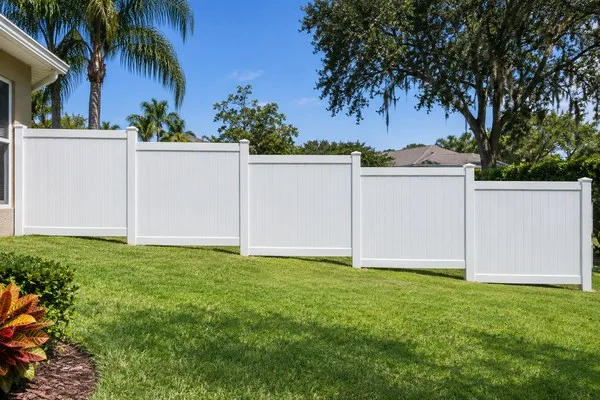
If you're fencing a property with uneven ground, you need to decide how panels will follow the slope and determine where you might have gaps. A sloped yard can still get a straight, secure fence. The answer is either stepping the panels down the grade or racking them to follow it, depending on the material.
At Straightline Fence and Supply, we handle fence installation on sloped Altamonte Springs yards and plan the gaps before the first post goes in. Reach out to our team or call (407) 593-1888 to talk through your yard.
What Is the Difference Between Stepped and Racked Fence Panels?
Stepped panels stay level and drop down the slope at each post, like a staircase. Racked panels tilt to run parallel with the ground, so the bottom follows the grade.
Stepping keeps every panel level. The top line looks like a series of short steps, and each post climbs or drops a little from the one before it. The tradeoff is a small wedge of open space under the low end of each panel.
Racking shifts the panel itself to match the angle of the ground. The bottom stays close to the grass the whole way, and the top line slopes smoothly with the yard. Not every material can do it, and that is where the choice really gets made.
Picture a backyard off SR 436 that drops toward a retention pond. From the patio it looks flat, but sight down the fence line and you see the fall. That is the kind of yard where planning the stepping or racking up front makes the difference between a fence that looks crooked and one that looks built for the lot.
How Do Vinyl and Aluminum Each Handle a Slope?
Vinyl privacy fences step, and aluminum fences can rack. That one difference shapes how the finished fence looks on your grade.
Vinyl privacy panels mostly cannot rack the way wood or aluminum can. Their rails lock into routed posts at fixed angles, so the panels stay level and step down the slope one at a time. On a gentle grade, the steps are small and the fence reads as one clean line. Learn more about our vinyl fence installation.
Aluminum is more flexible. Racking lets the panels follow a steeper or rolling slope with an even gap at the bottom. It also keeps the view open, which matters if your yard looks out over the water. A home near Lake Orienta might want security without blocking that view.
Each one has a place. Vinyl gives full privacy, and aluminum follows uneven ground more naturally. Our aluminum fence installation page covers styles and finishes.
How Are Gaps Under a Stepped Fence Closed for Pets?
We keep the steps small and the panel bottoms tight to the grass, so the gap at the low end stays too narrow for a small dog to squeeze under.
On our Altamonte Springs sloped yard project, the yard looked flat until you sighted down the fence line. It fell gently toward the back, and the side yard dropped more past the AC unit. The crew stepped the white vinyl an inch or two per panel and kept every panel level.
The gap under each low end stayed narrow enough that a small dog could not get under it. Where a slope is steeper, some grading before installation can even out the worst spots.
Gate placement matters too. On that job, the self-latching walk gate went on the high side near the house, so it swings without the bottom rail dragging. The line also sits far enough off the AC condenser for a technician to get around it.
The whole yard took two days on site. If your dog would rather be running laps at Cranes Roost Park, this is the detail that keeps them home.
What Drives the Quote on a Sloped Yard?
The steepness of the slope, the soil, the number of posts, and the footage drive the quote. That is why we measure the grade in person instead of guessing from a photo.
A gentle grade steps easily. A steeper one may need shorter panel sections, which means more posts, or some grading before installation. Soft or uneven soil can change how the posts are set. Gates, the material you choose, and how much fence you need all factor in as well.
Permits and HOA approval are part of the plan too. We pull the city permit. Many HOAs ask for a copy of your survey with the fence line drawn on it, and a fence built without approval may have to come down at your cost. We help you get the paperwork right before anyone digs.
The best way to know your number is to have someone walk the yard. Call (407) 593-1888 to have your yard measured, or contact us to request an estimate. We will show you how the fence will step or rack across your slope before you commit.